
AXIS Q6020-E Panoramic Camera
Installation
Preview mode
Preview mode is ideal for installers when fine tuning the camera view during the installation. No login is required to access the camera view in preview mode. It is available only in factory defaulted state for a limited time from powering up the device.
Connect to the camera's wireless network and adjust the sensors manually
Before you start:
- In the device’s web interface, go to System > Accessories > USB configuration and turn on Enable on reboot.
Install the camera on the mount according to the installation guide.
Open the SD card/USB cover and connect the wireless adapter to the camera’s USB connector.
Restart the camera by pressing the restart button.
Connect to the camera’s access point with your computer or mobile phone by scanning the barcode printed on the label on the camera.
Open a browser and type the IP address 192.168.1.1.
Enter your username and password.
You are now in the camera’s web interface, and can see how to adjust the sensors through live view.
- When you’re done with the adjustments:
Remove the wireless adapter and close the cover.
- Note
The camera access point to the wireless adapter closes after two hours.
Turn off Enable on reboot.
Get started
Find the device on the network
To find Axis devices on the network and assign them IP addresses in Windows®, use AXIS IP Utility or AXIS Device Manager. Both applications are free and can be downloaded from axis.com/support.
For more information about how to find and assign IP addresses, go to How to assign an IP address and access your device.
Browser support
You can use the device with the following browsers:
ChromeTM | EdgeTM | Firefox® | Safari® | |
Windows® | ✓ | ✓ | * | * |
macOS® | ✓ | ✓ | * | * |
Linux® | ✓ | ✓ | * | * |
Other operating systems | * | * | * | * |
✓: Recommended
*: Supported with limitations
Open the device's web interface
Open a browser and type the IP address or host name of the Axis device.
If you don’t know the IP address, use AXIS IP Utility or AXIS Device Manager to find the device on the network.
Type the username and password. If you access the device for the first time, you must create an administrator account. See Create an administrator account.
For descriptions of all features and settings in the web interface of devices with AXIS OS, see AXIS OS web interface help.
Create an administrator account
The first time you log in to your device, you must create an administrator account.
Enter an account.
Enter a password. See Secure passwords.
Re-enter the password.
Accept the license agreement.
Click Add account.
The device has no default account. If you lose the password for your administrator account, you must reset the device. See Reset to factory default settings.
Secure passwords
Use HTTPS (which is enabled by default) to set your password or other sensitive configurations over the network. HTTPS enables secure and encrypted network connections, thereby protecting sensitive data, such as passwords.
The device password is the primary protection for your data and services. Axis devices do not impose a password policy as they may be used in various types of installations.
To protect your data we strongly recommend that you:
Use a password with at least 8 characters, preferably created by a password generator.
Don’t expose the password.
Change the password at a recurring interval, at least once a year.
Make sure that no one has tampered with the device software
- To make sure that the device has its original AXIS OS, or to take full control of the device after a security attack:
Reset to factory default settings. See Reset to factory default settings.
After the reset, secure boot guarantees the state of the device.
Configure and install the device.
Configure your device
This section covers all the important configurations that an installer needs to do to get the product up and running after the hardware installation has been completed.
Configuration and calibration
Before using the camera, you must use the setup assistant to configure and calibrate it. During configuration, you select the installation type, lens selection, installation focus, and PTZ information.
The setup assistant starts automatically the first time you turn on the camera. To start it manually or make changes later:
Go to Status > Configuration.
Click Start setup assistant.
Basic settings
Set the power line frequency
Go to Video > Installation > Power line frequency.
Select a power line frequency and click Save and restart.
Set the orientation
Go to Video > Installation > Rotate.
Select 0 , 90, 180 or 270 degrees.
See also Monitor long and narrow areas.
Replace the lens
Disconnect power from the device.
Remove the dome ring and the standard lens.
Attach the new lens and reattach the dome ring.
Reconnect the power.
Log in to the device’s web interface and go to Status > Configuration.
Click View setup assistant.
Go to Lens selection and select the new lens from the camera drop-down list.
Go to Installation focus and start the focus of the selected camera.
When the installation focus is complete, finish the setup assistant and click Done.
Adjust the image
This section includes instructions about configuring your device. If you want to learn more about how certain features work, go to Learn more.
Level the camera
- To adjust the view in relation to a reference area or an object, use the level grid in combination with a mechanical adjustment of the camera.
Go to Video > Image > and click .
Click to show the level grid.
Adjust the camera mechanically until the position of the reference area or the object is aligned with the level grid.
Adjust the focus
- To adjust the focus:
Go to Video > Installation > Focus.
Click to show the autofocus area.
Adjust the autofocus area to cover the part of the image that you want to be in focus.
If you don’t select an autofocus area, the camera focuses on the entire scene. We recommend that you focus on a static object.
Click Autofocus.
To fine tune the focus, adjust the focus slider.
Select exposure mode
To improve image quality for specific surveillance scenes, use exposure modes. Exposure modes lets you control aperture, shutter speed, and gain. Go to Video > Image > Exposure and select between the following exposure modes:
For most use cases, select Automatic exposure.
For environments with certain artificial lighting, for example fluorescent lighting, select Flicker-free.
Select the same frequency as the power line frequency.
For environments with certain artificial light and bright light, for example outdoors with fluorescent lighting at night and sun during daytime, select Flicker-reduced.
Select the same frequency as the power line frequency.
To lock the current exposure settings, select Hold current.
Benefit from IR light in low-light conditions by using night mode
Your camera uses visible light to deliver color images during the day. But as the visible light diminishes, color images become less bright and clear. If you switch to night mode when this happens, the camera uses both visible and near-infrared light to deliver bright and detailed black-and-white images instead. You can set the camera to switch to night mode automatically.
Go to Video > Night mode, and make sure that the mode is set to Auto.
To set at what light level you want the camera to switch to night mode, select Auto advanced and move the Day to night threshold slider toward Bright or Dark.
- Note
If you set the switch to night mode to occur when it’s brighter, the image remains sharper as there is less low-light noise. If you set the switch to occur when it’s darker, the image colors are maintained for longer, but there is more image blur due to low-light noise.
Reduce noise in low-light conditions
To reduce noise in low-light conditions, you can adjust one or more of the following settings:
Adjust the trade-off between noise and motion blur. Go to Video > Image > Exposure and move the Blur-noise trade-off slider toward Low noise.
Set the exposure mode to automatic.
- Note
A high max shutter value can result in motion blur.
To slow down the shutter speed, set max shutter to the highest possible value.
- Note
When you reduce the max gain, the image can become darker.
Set the max gain to a lower value.
If there is an Aperture slider, move it towards Open.
Reduce motion blur in low-light conditions
- To reduce motion blur in low-light conditions, adjust one or more of the following settings in Video > Image > Exposure:
- Note
When you increase the gain, image noise also increases.
Set Max shutter to a shorter time, and Max gain to a higher value.
- If you still have problems with motion blur:
Increase the light level in the scene.
Mount the camera so that objects move toward it or away from it rather than sideways.
Handle scenes with strong backlight
Dynamic range is the difference in light levels in an image. In some cases the difference between the darkest and the brightest areas can be significant. The result is often an image where either the dark or the bright areas are visible. Wide dynamic range (WDR) makes both dark and bright areas of the image visible.
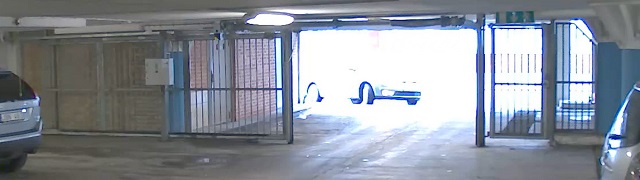
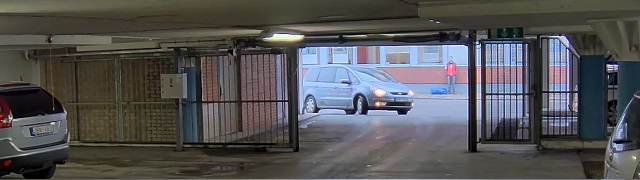
- WDR can cause artifacts in the image.
- WDR may not be available for all capture modes.
Go to Video > Image > Wide dynamic range.
Turn on WDR.
Use the Local contrast slider to adjust the amount of WDR.
Use the Tone mapping slider to adjust the amount of WDR.
If you still have problems, go to Exposure and adjust the Exposure zone to cover the area of interest.
Find out more about WDR and how to use it at axis.com/solutions/wide-dynamic-range-wdr.
Monitor long and narrow areas
Use corridor format to better utilize the full field of view in a long and narrow area, for example a staircase, hallway, road, or tunnel.
Depending on your device, turn the camera or the 3-axis lens in the camera 90° or 270°.
If the device doesn’t have automatic rotation of the view, go to Video > Installation.
Rotate the view 90° or 270°.
Verify the pixel resolution
To verify that a defined part of the image contains enough pixels to, for example, recognize license plates, you can use the pixel counter.
Go to Video > Image.
Click .
Click for Pixel counter.
In the camera’s live view, adjust the size and position of the rectangle around the area of interest, for example where you expect license plates to appear.
You can see the number of pixels for each of the rectangle’s sides, and decide if the values are enough for your needs.
Hide parts of the image with privacy masks
You can create one or several privacy masks to hide parts of the image.
Go to Video > Privacy masks.
Click .
Click the new mask and type a name.
Adjust the size and placement of the privacy mask according to your needs.
To change the color for all privacy masks, click Privacy masks and select a color.
See also Privacy masks
Show an image overlay
You can add an image as an overlay in the video stream.
Go to Video > Overlays.
Click Manage images.
Upload or drag and drop an image.
Click Upload.
Select Image from the drop-down list and click .
Select the image and a position. You can also drag the overlay image in the live view to change the position.
Show a text overlay
You can add a text field as an overlay in the video stream. This is useful for example when you want to display the date, time or a company name in the video stream.
Go to Video > Overlays.
Select Text and click .
Type the text you want to display, or select modifiers to show for example the current date.
Select a position. You can also click-and-drag the overlay in the live view to change the position.
View and record video
This section includes instructions about configuring your device. To learn more about how streaming and storage works, go to Streaming and storage.
Reduce bandwidth and storage
Reducing the bandwidth can lead to loss of detail in the image.
Go to Video > Stream.
Click in the live view.
Select Video format AV1 if your device supports it. Otherwise select H.264.
Go to Video > Stream > General and increase Compression.
Go to Video > Stream > Zipstream and do one or more of the following:
- Note
The Zipstream settings are used for all video encodings except MJPEG.
Select the Zipstream Strength that you want to use.
Turn on Optimize for storage. This can only be used if the video management software supports B-frames.
Turn on Dynamic FPS.
Turn on Dynamic GOP and set a high Upper limit GOP length value.
Most web browsers don’t support H.265 decoding and because of this the device doesn’t support it in its web interface. Instead you can use a video management system or application that supports H.265 decoding.
Set up network storage
- To store recordings on the network, you need to set up your network storage.
Go to System > Storage.
Click Add network storage under Network storage.
Type the IP address of the host server.
Type the name of the shared location on the host server under Network share.
Type the username and password.
Select the SMB version or leave it on Auto.
Select Add share without testing if you experience temporary connection issues, or if the share is not yet configured.
Click Add.
Record and watch video
- Record video directly from the camera
Go to Video > Stream.
To start a recording, click .
If you haven’t set up any storage, click and . For instructions on how to set up network storage, see Set up network storage
To stop recording, click again.
- Watch video
Go to Recordings.
Click for your recording in the list.
Set up rules for events
You can create rules to make your device perform an action when certain events occur. A rule consists of conditions and actions. The conditions can be used to trigger the actions. For example, the device can start a recording or send an email when it detects motion, or show an overlay text while the device is recording.
To learn more, see Get started with rules for events.
Trigger an action
Go to System > Events and click + Add a rule. The rule defines when the device will perform certain actions. You can set up rules as scheduled, recurring, or manually triggered.
Enter a Name.
Select the Condition that must be met to trigger the action. If you specify more than one condition for the rule, all of the conditions must be met to trigger the action.
Select which Action to perform when the conditions are met.
Record video when the camera detects an object
This example explains how to set up the camera to start recording to the SD card when the camera detects an object. The recording will include five seconds before detection and one minute after detection ends.
Before you start:
Make sure you have an SD card installed.
- Make sure that AXIS Object Analytics is running:
Go to Apps > AXIS Object Analytics.
Start the application if it is not already running.
Make sure you have set up the application according to your needs.
- Create a rule:
Go to System > Events and add a rule.
Type a name for the rule.
In the list of conditions, under Application, select Object Analytics.
In the list of actions, under Recordings, select Record video while the rule is active.
In the list of storage options, select SD_DISK.
Select a camera and a stream profile.
Set the prebuffer time to 5 seconds.
Set the postbuffer time to 1 minute.
Click Save.
Show a text overlay in the video stream when the device detects an object
This example explains how to display the text “Motion detected” when the device detects an object.
- Make sure that AXIS Object Analytics is running:
Go to Apps > AXIS Object Analytics.
Start the application if it is not already running.
Make sure you have set up the application according to your needs.
- Add the overlay text:
Go to Video > Overlays.
Under Overlays, select Text and click .
Enter
#Din the text field.Choose text size and appearance.
To position the text overlay, click and select an option.
- Create a rule:
Go to System > Events and add a rule.
Type a name for the rule.
In the list of conditions, under Application, select Object Analytics.
In the list of actions, under Overlay text, select Use overlay text.
Select a video channel.
In Text, type “Motion detected”.
Set the duration.
Click Save.
Audio
Connect to a network speaker
Network speaker pairing allows you to use a compatible Axis network speaker as if it is connected directly to the camera. Once paired, the speaker acts as an audio out device where you can play audio clips and transmit sound through the camera.
For this feature to work with a video management software (VMS), you must first pair the camera with the network speaker, then add the camera to your VMS.
- Pair camera with network speaker
Go to System > Edge-to-edge > Pairing.
Click Add and select the pairing type Audio from the drop-down list.
Select Speaker pairing.
Type the network speaker’s IP address, username and password.
Click Connect. A confirmation message appears.
Connect to a network microphone
Network microphone pairing allows you to use a compatible Axis network microphone as if it is connected directly to the camera. Once paired, the microphone will take up sounds from the surrounding area and make it available as an audio input device, usable in media streams and recordings.
For this feature to work with a video management software (VMS), you must first pair the camera with the network microphone, then add the camera to your VMS.
- Pair camera with network microphone
Go to System > Edge-to-edge > Pairing.
Click Add and select the pairing type Audio from the drop-down list.
Select Microphone pairing.
Type the network microphone’s IP address, username and password.
Click Connect. A confirmation message appears.
Video management system requirements
AXIS Camera Station Pro version 6.6 or later
AXIS Optimizer for Milestone XProtect® version 5.3.15.0 or later
The web interface
To read about all the features and settings available in the web interface of devices with AXIS OS, go to AXIS OS web interface help.
Learn more
Privacy masks
A privacy mask is a user-defined area that prevents users from viewing a part of the monitored area. In the video stream, privacy masks appear as blocks of solid color.
You’ll see the privacy mask on all snapshots, recorded video, and live streams.
You can use the VAPIX® application programming interface (API) to hide the privacy masks.
If you use multiple privacy masks it may affect the product’s performance.
You can create several privacy masks. Each mask can have 3 to 10 anchor points.
Overlays
Overlays are superimposed over the video stream. They are used to provide extra information during recordings, such as a timestamp, or during product installation and configuration. You can add either text or an image.
Streaming and storage
Video compression formats
Decide which compression method to use based on your viewing requirements, and on the properties of your network. The available options are:
H.264 or MPEG-4 Part 10/AVC
H.264 is a licensed technology. The Axis product includes one H.264 viewing client license. To install additional unlicensed copies of the client is prohibited. To purchase additional licenses, contact your Axis reseller.
H.264 can, without compromising image quality, reduce the size of a digital video file by more than 80% compared to the Motion JPEG format and by as much as 50% compared to older MPEG formats. This means that less network bandwidth and storage space are required for a video file. Or seen another way, higher video quality can be achieved for a given bitrate.
H.265 or MPEG-H Part 2/HEVC
H.265 can, without compromising image quality, reduce the size of a digital video file by more than 25% compared to H.264.
- H.265 is licensed technology. The Axis product includes one H.265 viewing client license. Installing additional unlicensed copies of the client is prohibited. To purchase additional licenses, contact your Axis reseller.
- Most web browsers don’t support H.265 decoding and because of this the camera doesn’t support it in its web interface. Instead you can use a video management system or application supporting H.265 decoding.
How do Image, Stream, and Stream profile settings relate to each other?
The Image tab contains camera settings that affect all video streams from the product. If you change something in this tab, it immediately affects all video streams and recordings.
The Stream tab contains settings for video streams. You get these settings if you request a video stream from the product and don’t specify for example resolution, or frame rate. When you change the settings in the Stream tab, it doesn’t affect ongoing streams, but it will take effect when you start a new stream.
The Stream profiles settings override the settings from the Stream tab. If you request a stream with a specific stream profile, the stream contains the settings of that profile. If you request a stream without specifying a stream profile, or request a stream profile that doesn't exist in the product, the stream contains the settings from the Stream tab.
Bitrate control
Bitrate control helps you to manage the bandwidth consumption of your video stream.
Variable bitrate (VBR)
Variable bitrate allows the bandwidth consumption to vary depending on the level of activity in the scene. The more activity, the more bandwidth you need. With variable bitrate you are guaranteed constant image quality, but you need to make sure you have storage margins.
Maximum bitrate (MBR)
Maximum bitrate lets you set a target bitrate to handle bitrate limitations in your system. You might see a decline in image quality or frame rate as the instantaneous bitrate is kept below the specified target bitrate. You can choose to prioritize either image quality or frame rate. We recommend that you configure the target bitrate to a higher value than the expected bitrate. This gives you a margin in case there is a high level of activity in the scene.
- Target bitrate
Average bitrate (ABR)
With average bitrate, the bitrate is automatically adjusted over a longer period of time. This is so you can meet the specified target and provide the best video quality based on your available storage. Bitrate is higher in scenes with a lot of activity, compared to static scenes. You are more likely to get better image quality when in scenes with a lot of activity if you use the average bitrate option. You can define the total storage required to store the video stream for a specified amount of time (retention time) when image quality is adjusted to meet the specified target bitrate. Specify the average bitrate settings in one of the following ways:
To calculate the estimated storage need, set the target bitrate and the retention time.
To calculate the average bitrate, based on available storage and required retention time, use the target bitrate calculator.
- Target bitrate
- Actual average bitrate
- You can also turn on maximum bitrate and specify a target bitrate within the average bitrate option.
- Target bitrate
- Actual average bitrate
Edge-to-edge technology
Edge-to-edge is a technology that makes IP devices communicate directly with each other. It offers smart pairing functionality between, for example, Axis cameras and Axis audio or radar products.
Make sure the paired devices run the same AXIS OS version.
For more information, see the white paper “Edge-to-edge technology” at whitepapers.axis.com/edge-to-edge-technology.
Speaker pairing
Edge-to-edge speaker pairing allows you to use a compatible Axis network speaker as if it’s part of your camera. Once paired, the speaker's features are integrated in the camera's web interface and the network speaker acts as an audio out device where you can play audio clips and transmit sound through the camera.
The camera will identify itself to the VMS as a camera with integrated audio output and redirect any played audio to the speaker.
Analytics and apps
With analytics and apps you can get more out of your Axis device. AXIS Camera Application Platform (ACAP) is an open platform that makes it possible for third parties to develop analytics and other apps for Axis devices. Apps can be preinstalled on the device, available for download for free, or for a license fee.
To find the user manuals for Axis analytics and apps, go to help.axis.com.
AXIS Object Analytics
AXIS Object Analytics is an analytic application that comes preinstalled on the camera. It detects objects that move in the scene and classifies them as, for example, humans or vehicles. You can set up the application to send alarms for different types of objects. To find out more about how the application works, see AXIS Object Analytics user manual.
Object in area - Autopilot
Autopilot monitors an area of interest from the multidirectional camera and tracks persons, vehicles or other objects moving in the area, using the PTZ camera. The objects of interest can be categorized and certain types of objects can be excluded. Specific areas or directions can be prioritized higher than others. Autopilot can also trigger events, such as alerting security staff, starting video recordings, or playing audio clips in network speakers.
Record video when the camera detects moving objects in an area of interest
This example explains how to set up the camera to detect moving objects in an area of interest to start recording it.
- Before you start:
Connect the PTZ camera to the multisensor camera through the set up assistant.
Create a stream profile in the PTZ camera.
Set up network storage or onboard storage to the PTZ camera.
Check that all sensors are set and calibrated.
- Configure the scenario Object in area – Autopilot on the multisensor camera:
Log in to the device’s web interface as an administrator and go to Analytics > AXIS Object Analytics.
Start the application and click Open.
In Considerations, read through the information.
Click New scenario.
Select the camera where you want to view the area of interest and click Next.
Select the scenario Object in area – Autopilot.
Select the type of object you want the application to detect. Read more about Classification of objects.
Configure your scenario and adjust the configuration to the area of interest. To find out how to adjust the default line or include area, see Adjust virtual line of area.
If you have more than one area of interest to detect, set Priority for PTZ settings.
Click Calibrate and Finish.
To rename or modify your scenario, click Open.
- Create a rule in the PTZ camera:
Go to System > Events and add a rule.
Type a name for the rule.
In the list of conditions, under PTZ, select PTZ movement on channel: Camera 1.
In the list of actions, under Recordings, select Record video while the rule is active.
Select a storage option.
Select a stream profile.
Click Save.
Metadata visualization
Analytics metadata is available for moving objects in the scene. Supported object classes are visualized in the video stream through a bounding box surrounding the object, along with information about the object type and confidence level of the classification. To learn more about how to configure and consume analytics metadata, see AXIS Scene Metadata integration guide.
Specifications
Product overview
- SD card slot
- USB connector
- Camera heads
- Network connector
- Restart button
- Control button
- LED indicator
LED indicators
Status LED | Indication |
Unlit | Connection and normal operation. |
Green | Shows steady green for 10 seconds for normal operation after startup completed. |
Amber | Steady during startup. Flashes during device software upgrade or reset to factory default. |
Amber/Red | Flashes amber/red if network connection is unavailable or lost. |
Blue | Shows steady blue when wireless access point is available through wireless adapter. |
SD card slot
- Risk of damage to SD card. Don’t use sharp tools, metal objects, or excessive force when inserting or removing the SD card. Use your fingers to insert and remove the card.
- Risk of data loss and corrupted recordings. Unmount the SD card from the device’s web interface before removing it. Don’t remove the SD card while the product is running.
This device supports microSD/microSDHC/microSDXC cards.
For SD card recommendations, see axis.com.


 microSD, microSDHC, and microSDXC Logos are trademarks of SD-3C LLC. microSD, microSDHC, microSDXC are trademarks or registered trademarks of SD-3C, LLC in the United States, other countries or both.
Buttons
Control button
- The control button is used for:
Resetting the product to factory default settings. See Reset to factory default settings.
Connecting to a one-click cloud connection (O3C) service over the internet. To connect, press and release the button, then wait for the status LED to flash green three times.
Restart button
Press the restart button to restart the product.
Connectors
Network connector
RJ45 Push-pull Connector (IP66) with High Power over Ethernet (High PoE).
To comply with the IP66-rated design of the camera and maintain the IP66 protection, the supplied RJ45 Push-pull Connector (IP66) shall be used. Alternatively, use the RJ45 IP66-rated cable with premounted connector which is available from your Axis reseller. Don’t remove the plastic network connector shield from the camera.
USB connector
Use the USB connector to connect external accessories. See the product’s datasheet for supported accessories.
Clean your device
You can clean your device with lukewarm water and mild, nonabrasive soap.
- Harsh chemicals can damage the device. Don’t use chemicals such as window cleaner or acetone to clean your device.
- Avoid cleaning in direct sunlight or elevated temperatures, since this can cause stains.
Use a can of compressed air to remove dust and loose dirt from the device.
If necessary, clean the device with a soft microfiber cloth dampened with lukewarm water and mild, nonabrasive soap.
To remove any residual cleaning agents, wipe the device with a soft microfiber cloth dampened with lukewarm water.
To avoid stains, dry the device with a clean, nonabrasive cloth.
For more information about cleaning of Axis devices, see the white paper Chemical resistance to common cleaning agents.
Troubleshooting
Reset to factory default settings
Reset to factory default should be used with caution. A reset to factory default resets all settings, including the IP address, to the factory default values.
To reset the product to the factory default settings:
Press and hold the control button and the restart button at the same time.
Release the restart button but continue to hold down the control button for 15–30 seconds until the status LED indicator flashes amber.
Release the control button. The process is complete when the status LED indicator turns green. If no DHCP server is available on the network, the device IP address will default to one of the following:
Devices with AXIS OS 12.0 and later: Obtained from the link-local address subnet (169.254.0.0/16)
Devices with AXIS OS 11.11 and earlier: 192.168.0.90/24
Use the installation and management software tools to assign an IP address, set the password and access the video stream.
You can also reset parameters to factory default through the device’s web interface. Go to Maintenance > Factory default and click Default.
AXIS OS options
Axis offers device software management according to either the active track or the long-term support (LTS) tracks. Being on the active track means continuously getting access to all the latest product features, while the LTS tracks provide a fixed platform with periodic releases focused mainly on bug fixes and security updates.
Using AXIS OS from the active track is recommended if you want to access the newest features, or if you use Axis end-to-end system offerings. The LTS tracks are recommended if you use third-party integrations, which are not continuously validated against the latest active track. With LTS, the products can maintain cybersecurity without introducing any significant functional changes or affecting any existing integrations. For more detailed information about Axis device software strategy, go to axis.com/support/device-software.
Check the current AXIS OS version
AXIS OS determines the functionality of our devices. When you troubleshoot a problem, we recommend that you to start by checking the current AXIS OS version. The latest version might contain a correction that fixes your particular problem.
To check the current AXIS OS version:
Go to the device’s web interface > Status.
Under Device info, see the AXIS OS version.
Upgrade AXIS OS
- When you upgrade the device software, your preconfigured and customized settings are saved. Axis Communications AB can't guarantee that the settings are saved, even if the features are available in the new AXIS OS version.
- Starting from AXIS OS 12.6, you must install every LTS version between your device’s current version and the target version. For example, if the currently installed device software version is AXIS OS 11.2, you have to install the LTS version AXIS OS 11.11 before you can upgrade the device to AXIS OS 12.6. For more information, see AXIS OS Lifecycle guide: Upgrade path.
- Make sure the device remains connected to the power source throughout the upgrade process.
- When you upgrade the device with the latest AXIS OS version in the active track, the product receives the latest functionality available. Always read the upgrade instructions and release notes available with each new release before you upgrade. To find the latest AXIS OS version and the release notes, go to axis.com/support/device-software.
Download the AXIS OS file to your computer, available free of charge at axis.com/support/device-software.
Log in to the device as an administrator.
Go to Maintenance > AXIS OS upgrade and click Upgrade.
- When the upgrade has finished, the product restarts automatically.
You can use AXIS Device Manager to upgrade multiple devices at the same time. Find out more at axis.com/products/axis-device-manager.
Technical problems and possible solutions
Problems upgrading AXIS OS
AXIS OS upgrade failed If the upgrade fails, the device reloads the previous version. The most common reason is that the wrong AXIS OS file has been uploaded. Check that the name of the AXIS OS file corresponds to your device and try again. |
Problems after AXIS OS upgrade If you experience problems after the upgrade, roll back to the previously installed version from the Maintenance page. |
Problems setting the IP address
Can’t set the IP address
|
Problems accessing the device
Can’t log in when accessing the device from a browser When HTTPS is enabled, make sure that you use the correct protocol (HTTP or HTTPS) when you try to log in. You might need to manually type If you’ve lost the password for the root account, you must reset the device to the factory default settings. For instructions, see Reset to factory default settings. |
The IP address has been changed by DHCP IP addresses obtained from a DHCP server are dynamic and could change. If the IP address has been changed, use AXIS IP Utility or AXIS Device Manager to locate the device on the network. Identify the device using its model or serial number, or by the DNS name (if the name has been configured). If required, you can assign a static IP address manually. For instructions, go to axis.com/support. |
Certificate error when using IEEE 802.1X For authentication to work properly, the date and time settings in the Axis device must be synchronized with an NTP server. Go to System > Date and time. |
The browser isn’t supported For a list of recommended browsers, see Browser support. |
Can’t access the device externally To access the device externally, we recommend you to use one of the following applications for Windows®:
For instructions and download, go to axis.com/vms. |
Problems with streaming
Multicast H.264 only accessible by local clients Check if your router supports multicasting, or if you need to configure the router settings between the client and the device. You might need to increase the TTL (Time To Live) value. |
No multicast H.264 displayed in the client Check with your network administrator that the multicast addresses used by the Axis device are valid for your network. Check with your network administrator to see if there is a firewall that prevents viewing. |
Poor rendering of H.264 images Ensure that your graphics card uses the latest driver. You can usually download the latest drivers from the manufacturer’s website. |
Color saturation is different in H.264 and Motion JPEG Modify the settings for your graphics adapter. Check the adapter’s documentation for more information. |
Lower frame rate than expected
|
Can't select H.265 encoding in live view Web browsers don’t support H.265 decoding. Use a video management system or application that supports H.265 decoding. |
Problems with MQTT
Can’t connect over port 8883 with MQTT over SSL The firewall blocks traffic that uses port 8883 since it’s regarded insecure. In some cases the server/broker might not provide a specific port for MQTT communication. It might still be possible to use MQTT over a port normally used for HTTP/HTTPS traffic.
|
If you can’t find what you’re looking for here, try the troubleshooting section at axis.com/support.
Performance considerations
When you set up your system, it’s important to consider how different settings and situations affect performance. Some factors affect bandwidth (bitrate), others affect frame rate, and some affect both.
The most important factors to consider:
High image resolution or lower compression levels result in images containing more data which in turn affects the bandwidth.
Rotating the image in the GUI can increase the product's CPU load.
Access by large numbers of Motion JPEG clients or unicast H.264/H.265/AV1 clients affects the bandwidth.
Simultaneous viewing of different streams (resolution, compression) by different clients affects both frame rate and bandwidth.
Use identical streams wherever possible to maintain a high frame rate. Stream profiles can be used to ensure that streams are identical.
Accessing video streams with different codecs simultaneously affects both frame rate and bandwidth. For optimal performance, use streams with the same codec.
Heavy usage of event settings affects the product’s CPU load which in turn affects the frame rate.
Using HTTPS may reduce frame rate, in particular if streaming Motion JPEG.
Heavy network utilization due to poor infrastructure affects the bandwidth.
Viewing on poorly performing client computers lowers perceived performance and affects frame rate.
Running multiple AXIS Camera Application Platform (ACAP) applications simultaneously may affect the frame rate and the general performance.
Contact support
If you need more help, go to axis.com/support.
Cybersecurity
Cybersecurity supports a successful product lifecycle with minimized risks. You can find in-depth information and documentation about our cybersecurity approach at axis.com/about-axis/cybersecurity. Follow the cybersecurity guidelines below to receive product security notifications from Axis and to configure your product for a secure lifecycle and decommissioning.
At Axis Trust Center, you can find information about how Axis implements security compliance, transparency, data protection, and privacy.
Vulnerability management
Axis is a Common Vulnerability and Exposures (CVE) Numbering Authority (CNA). To minimize your risk of exposure, we follow industry standards when identifying and resolving vulnerabilities in our devices, software, and services. Refer to axis.com/vulnerability-management for information about our vulnerability management policy or to report a vulnerability.
Security notifications
Subscribe to Axis security notification emails at axis.com/security-notification-service. We will send you information about vulnerabilities, corresponding security advisories, and other security-related matters for your Axis product.
Secure product lifecycle
Axis minimizes risks throughout the lifetime of our products through secure lifecycle management. Use our hardening guides at help.axis.com to more securely configure and operate your Axis products and to find information about:
- Secure first-use
- Axis products are pre-configured with high default protection to allow for secure initialization and encrypted communication from the very start.
- Intended use and common configuration mistakes
- Our guides provide information about the intended usage of Axis products, including common security-relevant misuse and configuration mistakes that should be avoided.
- Managing vulnerabilities and supply chain transparency
- A Software Bill of Material (SBOM) is published with every software release on axis.com to disclose vulnerabilities and improve supply chain transparency.
- Decommissioning and the secure erasure of data
- To securely decommission a product when it reaches the end of its lifecycle, reset it to factory default settings. This erases your configurations, stored data, and sensitive information.